Renting In or Renting Out

Renting In or Renting Out? Make It Work for Your Plan, Not Against It.

Whether you're a landlord who wants your property to earn its place in your retirement plan, or a tenant looking for a home that fits your budget and lifestyle, I help you rent with the full picture in view: the rules, the costs, and what it means for your wealth.

Rent icon
LandlordsTenants
The Asset Strategist approach

Why Rent With an Asset Strategist

Renting looks simple on the surface: list it, find someone, sign. But a rental decision quietly shapes your finances. For an owner, it decides whether your property earns income or sits as a cost, how the rent is taxed, and whether keeping it beats selling it. For a tenant, it decides how much of your monthly cash flow is left for saving.

Before we list or view anything, I walk through your numbers and your plan: what you need from the rental, what the rules allow, and how it fits the retirement you're building. Then we make the move on purpose, not by default.
Who this page is for

Which Side of the Rental Are You On?

I'm a Landlord

Renting out your HDB flat, condo or investment property? I help you check your eligibility, set a sensible rent, find suitable tenants and manage the property as the income-generating asset it should be.

Owners renting out a homeAn HDB or private home you're moving out of or keeping.
Investors buying to rentAn investment property where the rental needs to make sense in your plan.
See the Landlord Journey

I'm a Tenant

Looking for a home to rent? I help you find a place that fits your budget and lifestyle without derailing your savings goals, and I walk you through the agreement so you know what you're signing.

Individuals & familiesA home near work, school or family.
Professionals relocating to SingaporeA place that fits your pass type and timeline.
See the Tenant Journey
The Rental Journey

How It Works, Step by Step

1

Goals & Eligibility First

We confirm what you want from the rental (income, a holding strategy, a bridge before selling) and check whether you're allowed to rent out your property, so there are no surprises later.

2

Rent & Positioning

I look at comparable rentals and what tenants in your area are looking for, and we set a realistic rent that attracts good tenants instead of an optimistic number that sits.

3

Listing & Viewings

Your property is marketed and I manage viewings and enquiries so you aren't handling every message yourself.

4

Tenant Screening & Offer

I help you assess tenant eligibility and suitability, and negotiate terms with you.

5

Tenancy Agreement & Handover

We put the terms in a proper agreement, take care of the paperwork, and complete a handover with a condition record.

6

Ongoing Plan

We keep an eye on renewal timing, your rental income and tax position, and whether keeping, renewing or selling still fits your plan.

1

Budget & Needs First

We set a comfortable rent ceiling that protects your savings, and list what matters: location, commute, lease length, pets, furnishing.

2

Shortlist

I shortlist homes that fit, and flag any eligibility points up front, such as pass type or the HDB tenant rules.

3

Viewings

I arrange and join viewings so you can compare properly.

4

Offer & Negotiation

I negotiate on your behalf and explain terms that matter: deposit, repairs, break clause, what's included.

5

Agreement & Move-In

I walk you through the tenancy agreement, coordinate the paperwork and the move-in condition check, so you start with clarity.

Know the rules before you rent

Know the Rules Before You Rent

Renting in Singapore comes with real rules: who is allowed to rent out which home, who is allowed to rent it, how rent is taxed and what the agreement should cover. They depend on whether it's an HDB or a private property, and they can change. Here's the overview. In your free consultation, I'll work out exactly which rules apply to you.

6.1For landlords

Am I allowed to rent out my flat?

For an HDB flat, the rules on renting out are strict. Only Singapore Citizen owners can rent out the whole flat, and you generally need to have completed your Minimum Occupation Period (MOP) first. Some flats, such as Prime and Plus flats, can't be rented out at all. Renting out individual bedrooms follows a different set of rules. Check your status on My HDBPage before you plan anything.

Key figures

  • Who can rent out the whole flat: Singapore Citizen owners only. Singapore PR owners can't.
  • MOP: standard 5 years; 3 years for non-subsidised flats bought before 30 Aug 2010. Prime and Plus flats can't be rented out, even after 10 years.
  • Non-citizen tenant quota (whole flat only): applies if any tenant is a non-Malaysian non-citizen (SPR or foreigner), capped at 8% per neighbourhood and 11% per block. Once the quota is reached, only Singaporeans and Malaysians can rent in that neighbourhood or block. Doesn't apply to bedroom rentals.
  • Maximum tenants (whole flat): 4 for 1- and 2-room, 6 for 3-room, 8 for 4-room and bigger (reverting to 6 for rental periods extending beyond 31 Dec 2028). The cap doesn't apply if all tenants are from the same family unit.
  • Renting out bedrooms: 3-room or bigger flats only; 1 bedroom for a 3-room flat, up to 2 for a 4-room or bigger; HDB approval is needed before the tenancy begins and for each new tenant; changes or move-outs must be notified within 7 days; only HDB-built bedrooms qualify, not partitioned rooms. Occupant limit (owners, occupiers and tenants combined): 6 for 3-room, 8 for 4-room and bigger (reverting to 6 beyond 31 Dec 2028), and it applies even to tenants from the same family.
How I helpI check your eligibility and MOP position first, and then guide you through the HDB steps so your rental is approved and compliant.
6.2LandlordsTenants

Who is allowed to rent an HDB flat?

Not everyone can rent an HDB flat. Tenants need to be Singapore Citizens, Permanent Residents, or non-citizens living here legally on a valid pass, and tourists can't rent. Tenants also generally can't own another HDB flat. It's worth checking before you sign, because HDB rules apply to both sides.

Key figures

  • Eligible tenants: Singapore Citizens, SPRs, or non-citizens legally residing in Singapore holding an Employment Pass, S Pass, Work Permit, Student Pass, Dependant Pass or Long-Term Social Visit Pass valid for at least 6 months at application.
  • Work Permit holders in construction, manufacturing, marine and process sectors: must be Malaysian.
  • Not allowed: tourists.
  • Property status: tenants can't rent public-rental HDB flats or own other HDB flats, with two exceptions (divorced or legally separated persons; owners who are eligible to rent out their own flat and do so within one month). Tenants also can't own an Executive Condominium whose 5-year MOP hasn't been met.
  • Companies renting for employees: the employees must meet the same conditions.
How I helpI check tenant eligibility at the start so your agreement isn't put at risk, and I guide tenants through the checks before they commit.
6.3LandlordsTenants

What should the tenancy agreement cover?

A tenancy agreement protects both sides, but only if the key terms are clear: the deposit, who pays for minor repairs, what happens if the tenant has to leave early, and who pays the stamp duty. CEA publishes a standard HDB flat tenancy agreement template, and I use it as a starting point so the important points aren't left to chance.

Key points (amounts are agreed per tenancy)

  • Security deposit: expressed as a number of months' rent and agreed between both sides. The landlord can deduct from it only after giving written notice to fix a breach and the tenant fails to do so within 14 days. It's refunded without interest at the end of the tenancy, and the tenant can't use it to offset rent.
  • Minor repairs: the template sets a per-item, per-incident cap (amount agreed). Costs above the cap are borne by the landlord, unless caused by the tenant's negligence or wilful default, and the landlord reimburses any excess within 7 days.
  • Diplomatic / break clause: optional; if included, the tenant can end the tenancy after an agreed period if transferred out of Singapore, ceases employment or is ordered to leave, with agreed notice (or rent in lieu) and documentary evidence.
  • Stamp duty: the template lets both sides state who pays; if nothing is agreed, the tenant is liable.
  • Occupants: the agreement lists the permitted occupiers and their ID types.
How I helpI walk both sides through each clause in plain English, so the terms are agreed up front instead of argued about later.
6.4For landlords

How is rental income taxed, and what does it cost to set up?

Rent you receive is taxable income, and you declare it when you file your taxes. You can generally deduct certain costs of earning that rent, or choose a simplified flat deduction. There's also stamp duty on the tenancy agreement. Knowing both before you set the rent tells you what you'll actually keep.

Key figures

  • Rental income is taxable and the landlord declares it for the relevant Year of Assessment.
  • Deductible expenses (examples): the interest portion of your housing loan (not principal), property tax for the rental period, fire insurance, repairs and maintenance during the rental period, costs of securing a tenant such as agent commission, advertising and legal fees, and management fees to a third party. Capital improvements aren't deductible.
  • Simplified 15% deduction: residential landlords can choose a flat 15% of gross rent as deemed expenses instead of itemising, and can still claim actual mortgage interest on top. The same method must be used for all residential rental properties in the same year. It may not suit you if your real non-interest costs are above 15% of the rent.
  • Stamp duty on the tenancy agreement: 0.4% of the total rent for leases of 4 years or less; for longer leases, 0.4% of four times the average annual rent. Tenant usually pays by default. Stamp within 14 days if signed in Singapore, 30 days if signed overseas.
  • Property tax: rates differ for owner-occupied and non-owner-occupied homes. Ask me for your situation.
Illustrative example · hypothetical numbers, not a real client
Monthly rent$3,000
Gross rent for the year$36,000
Less: 15% simplified deduction$5,400
Less: mortgage interest for the year (example)$9,000
Net rental income added to your income for the year$21,600
Stamp duty on a 2-year agreement at 0.4% of total rent ($72,000)about $288

This is an illustration only. Your net rental income is added to your other income and taxed at your personal rate, so your real outcome depends on your situation.

How I helpI help you estimate your net rental position before you set the rent, and I'll point you to the right specialist if you want tax advice.

6.5For tenants

What should I check before I rent?

Before you commit to a home, check that the rental is legitimate and that the terms match what you were told. For an HDB flat, that means the landlord is allowed to rent it out and you're eligible to rent it. Then read the agreement: deposit, repairs, break clause and what's included.

Your checklist

  • Is the landlord allowed to rent? For a whole HDB flat, only Singapore Citizen owners can rent out the entire flat, and Prime and Plus flats can't be rented out. For bedrooms, HDB approval is needed before the tenancy begins and only HDB-built bedrooms qualify.
  • Are you eligible? Check your pass type and validity (at least 6 months at application), and that you don't own another HDB flat.
  • What to read in the agreement: deposit (months of rent and refund conditions), minor repairs cap, break clause, who pays stamp duty, permitted occupants.
How I helpI check the listing is compliant, confirm your eligibility, and explain the agreement before you sign.

This is general information for orientation only. Rules, rates and requirements are set by HDB, CEA and IRAS and can change, and they differ for HDB and private properties. It is not financial, legal or tax advice. Please check current figures with the relevant authority or speak to me about your own situation before making a decision.

Keep and rent, or sell?

Keep and Rent It Out, or Sell?

If you own a property you no longer live in, you have a real decision: rent it out, or sell it. Neither is automatically better. Renting keeps the asset and can add income, but it brings costs, tax on the rent, tenant management, and for HDB owners some strict rules. Selling releases cash and options, but triggers selling costs and a CPF refund.

Keep and rent it out

  • Keeps the asset
  • Possible rental income
  • Ongoing responsibilities and costs
  • Rental income is taxable
  • HDB eligibility rules apply
OR

Sell it

  • Releases cash and options
  • Selling costs and CPF refund apply
  • Ties in with your next move

I compare the two using your actual numbers: your loan, your CPF position, the likely rent, your timeline and your retirement plan. Then you choose with the full picture in front of you.

Think like an Asset Strategist

Think Like an Asset Strategist

Want to see how your property stacks up as an income-producing asset? Run it through Propscore SG, or read the Investor's Playbook to understand the thinking behind the S.T.E.V.E.N. Framework before we talk.

Propscore SG

See how your property scores as a wealth-building asset.

Score My Property
The Investor's Playbook

The Investor's Playbook

Understand the thinking behind the S.T.E.V.E.N. Framework.

Read the Playbook
Rental FAQs

Rental Questions, Answered

For landlords

Can I rent out my HDB flat?

It depends on your flat and whether you've completed your Minimum Occupation Period. For the whole flat, only Singapore Citizen owners can rent it out, the standard MOP is 5 years, and Prime and Plus flats can't be rented out. Renting out bedrooms follows separate rules, including HDB approval before the tenancy starts. Check your status on My HDBPage, and I'll confirm the rest with you before you list.

Who can I rent my flat to?

Tenants need to be Singapore Citizens, Permanent Residents, or non-citizens living here legally on a valid pass, and tourists can't rent. If any tenant is a non-Malaysian non-citizen, a quota applies at neighbourhood and block level, so I check it before we agree terms. There are also limits on how many people can live in the flat.

Is rental income taxable, and what can I claim?

Yes, rent is taxable income that you declare when you file. You can generally deduct costs of earning it, such as the interest portion of your loan, property tax for the rental period, repairs, and agent fees, or choose a simplified flat 15% deduction. I'll show you roughly what you'd keep before you set the rent, and I'd suggest speaking to a tax specialist for your own situation.

What should be in the tenancy agreement?

At minimum: the rent and term, the security deposit and refund conditions, who pays for minor repairs and up to what amount, whether there's a break clause, who pays the stamp duty, and who is allowed to live in the flat. I start from CEA's standard HDB tenancy agreement template and walk through each clause with you.

Should I rent out my property or sell it?

It depends on your goals, your cash flow and your retirement timeline. Renting keeps the asset and can add income but adds costs, tax and tenant management. Selling releases cash and options but triggers costs and a CPF refund. I compare both using your actual numbers rather than a generic answer.

For tenants

Who can rent an HDB flat?

Singapore Citizens, Permanent Residents, and non-citizens legally living here on a valid pass (valid for at least 6 months at application) can rent, but tourists can't. You generally can't own another HDB flat. I check your eligibility before you view, so you don't fall in love with a place you can't rent.

How much deposit should I expect to pay?

The deposit is agreed between you and the landlord and is written into the tenancy agreement as a number of months' rent. The agreement also sets out when the landlord can deduct from it and that it's refunded at the end, without interest. I'll negotiate it for you and explain the refund terms.

What if I need to leave early?

That depends on the agreement. Some tenancies include a break clause, often called a diplomatic clause, which lets you end the tenancy early in defined situations such as being transferred out of Singapore or ceasing employment, with notice and documents. It's optional, so it needs to be agreed and written in before you sign.

Who pays the stamp duty and repairs?

Stamp duty is paid by whoever the agreement says; if it's silent, the tenant is liable under CEA's template. Minor repairs are usually the tenant's up to an agreed amount per item, with larger costs on the landlord unless caused by the tenant. I make sure both are clearly agreed up front.

Don't see your question? Book a free consultation and ask me directly.

Book a Free Rental Consultation

These answers are general and for orientation only. Rules, rates and requirements are set by HDB, CEA and IRAS and can change, and they differ for HDB and private properties. They are not financial, legal or tax advice. Please check current figures with the relevant authority or speak to me about your own situation before making a decision.

Testimonials

Client's Story In Their Own Words

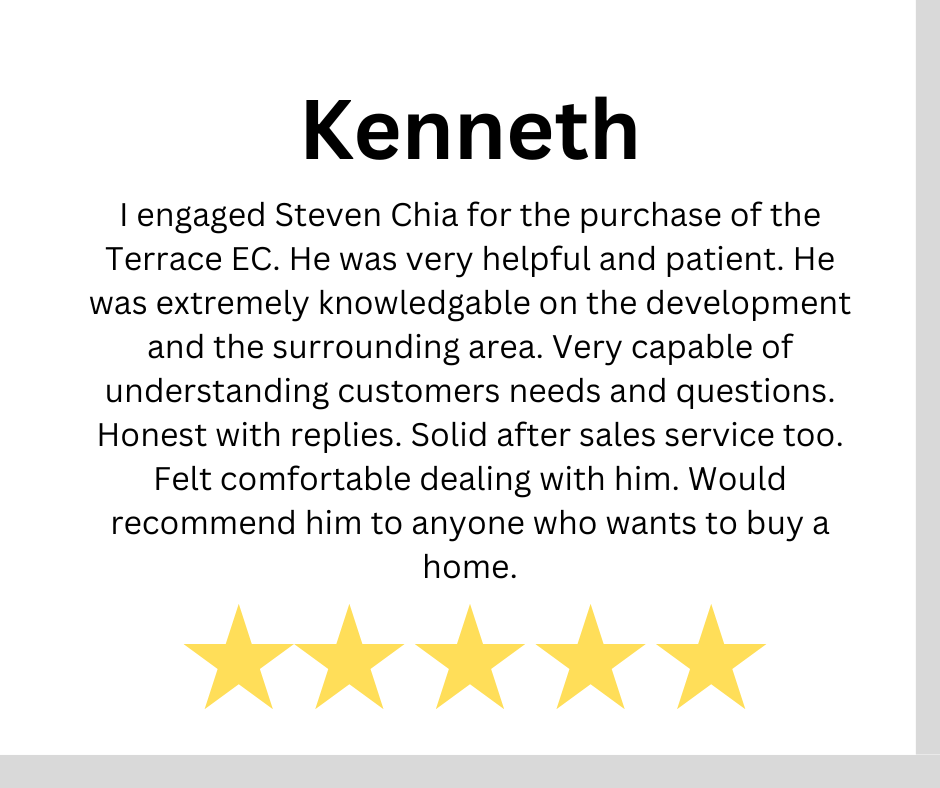
Steven Chia testimonial from Kenneth
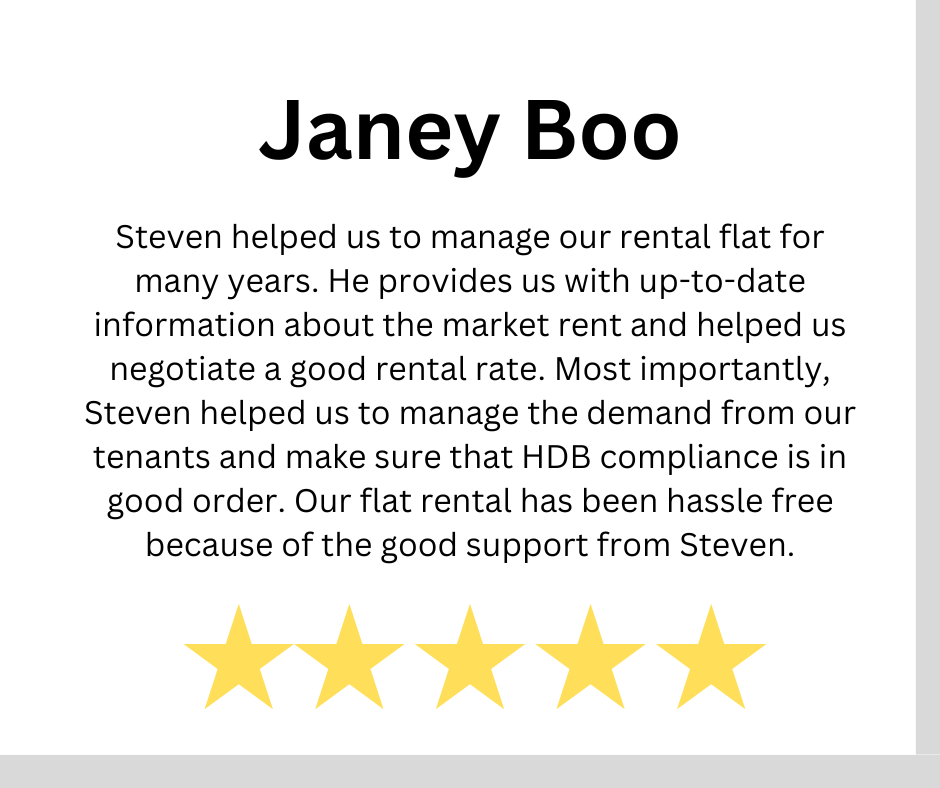
Steven Chia testimonial from Janey
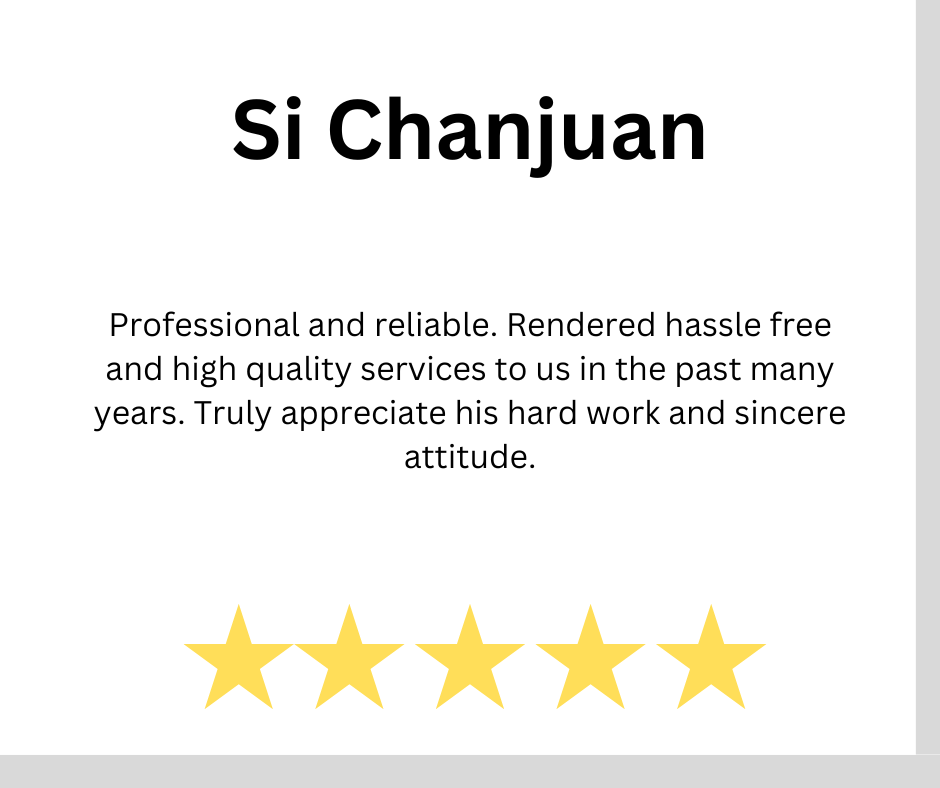
Steven Chia testimonial from Chanjuan
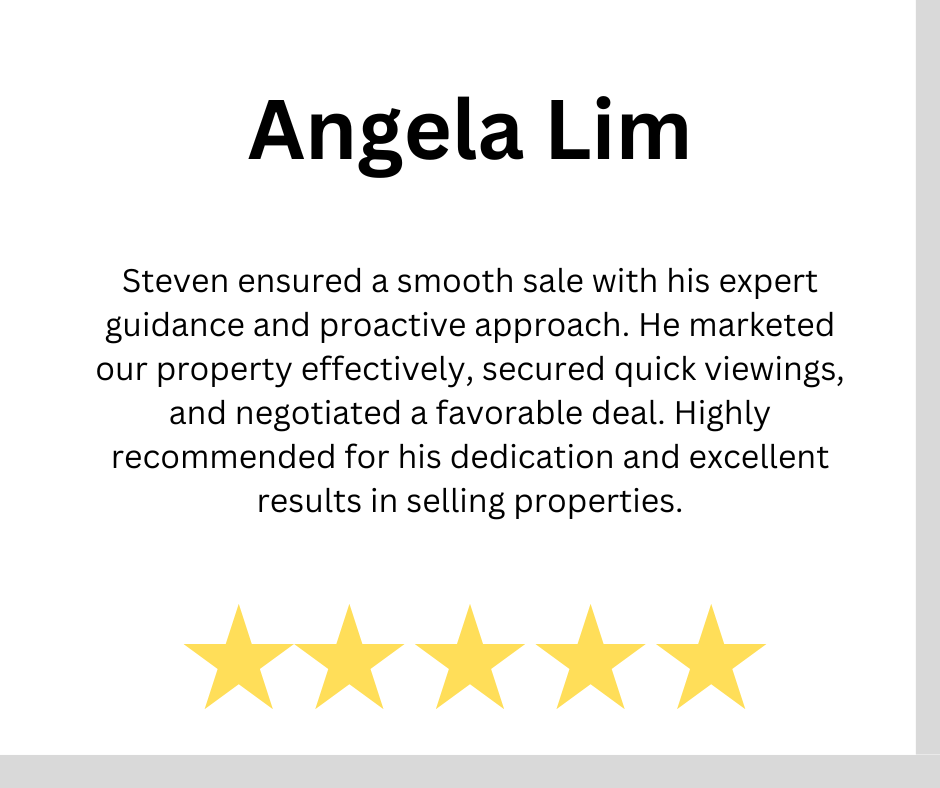
Steven Chia testimonial from Angela
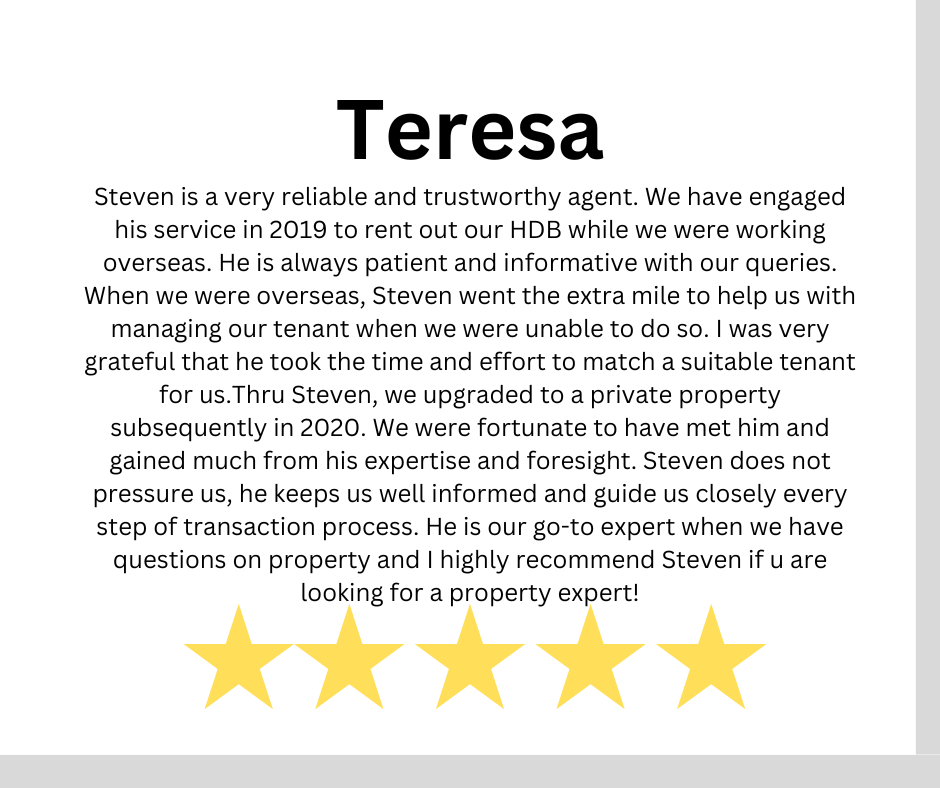
Steven Chia testimonial from Teresa
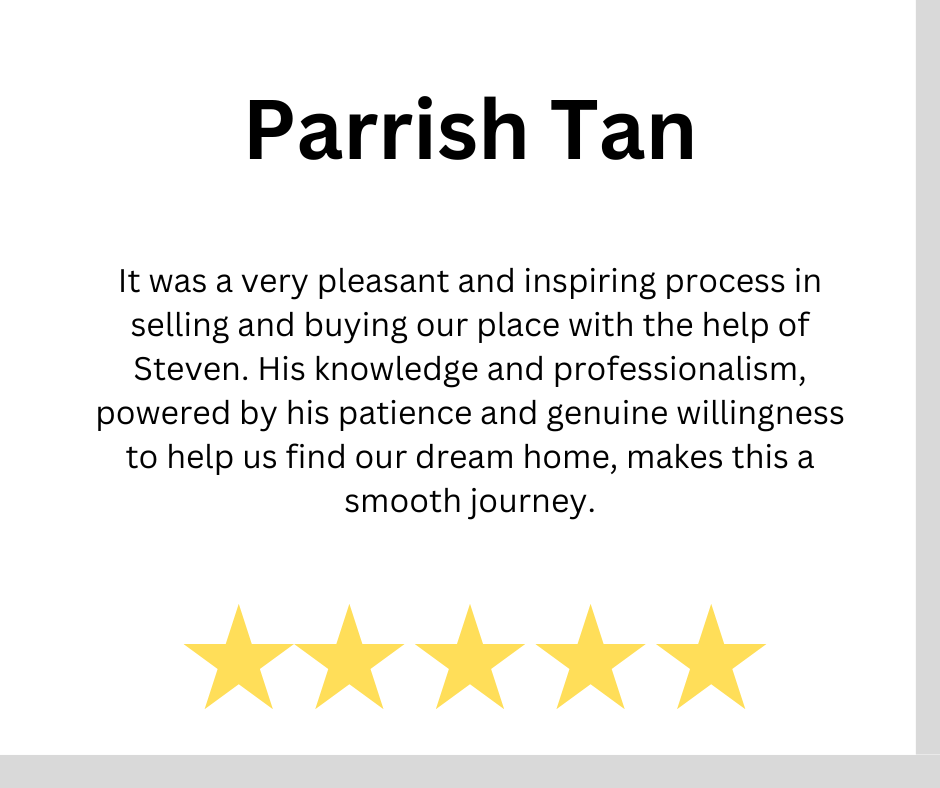
Steven Chia testimonial from Parrish
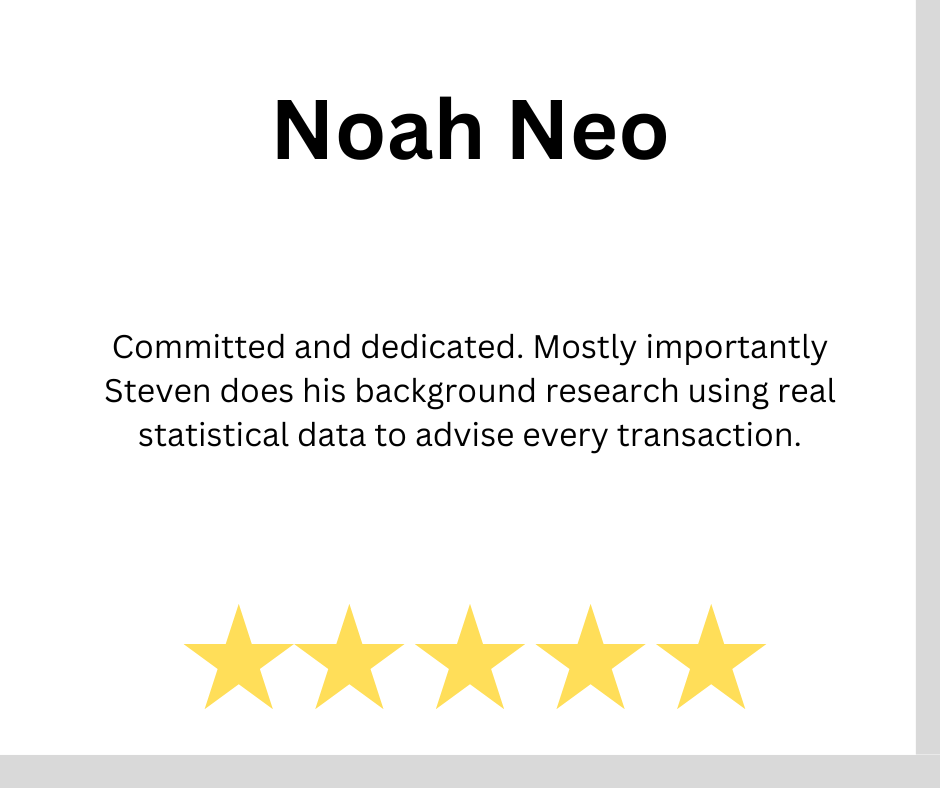
Steven Chia testimonial from Noah
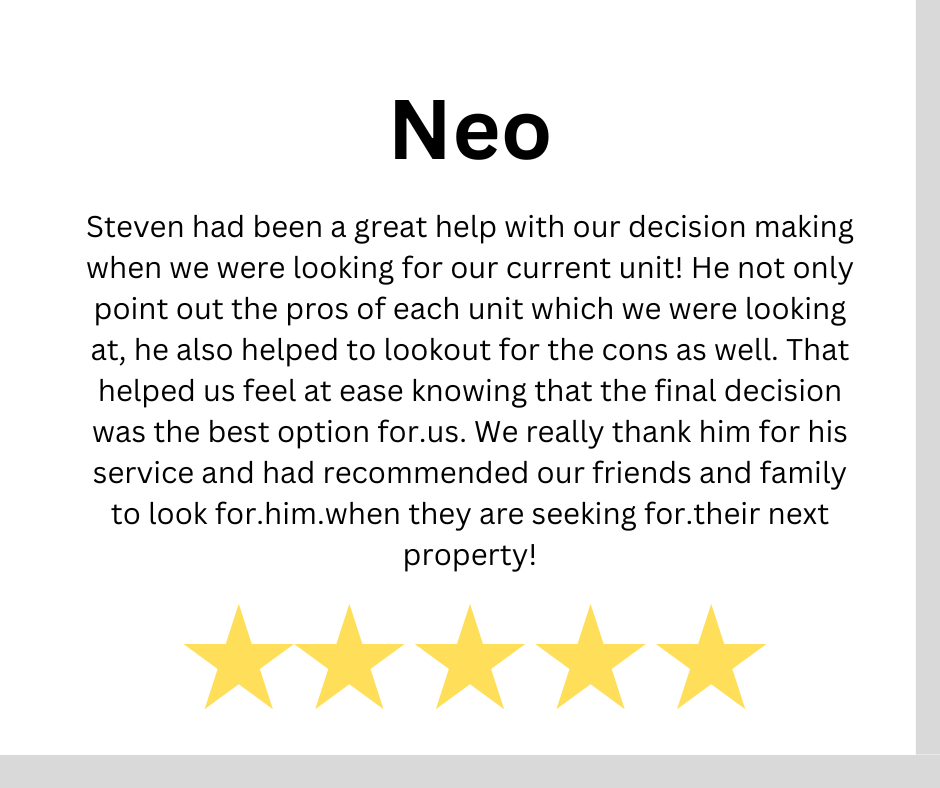
Steven Chia testimonial from Neo
Free, no-obligation

Let's Make Your Rental Work for the Plan You're Building

Book a free, no-obligation consultation and I'll walk through your goals, the rules that apply, and what a good rental looks like for you, whether you're renting in or renting out.

CEA Reg. No. R029037APropNex Realty Pte LtdSince 2008