Whether it's your first home, an upgrade, or an investment property, I help you buy with a full view of your CPF position, financing, and long-term retirement plan — not just what looks good on a viewing.
Most people shop for a home the way they'd shop for a car — compare a few units, pick the one that feels right, negotiate the price. But a property purchase touches your CPF, your loan eligibility, your monthly cash flow for the next 20–30 years, and your options when you eventually want to sell, upgrade, or retire on this asset.
Before we look at a single listing, I walk through your numbers and your goals first — so every property we view afterward is already filtered against what actually moves you toward the life you want, not just what's available this week.
First Time Buyer
New to the market? I'll walk you through CPF usage, grants, and loan eligibility step by step.
Upgraders
Moving from HDB to private, or resale to a larger unit? I'll show you how the move affects your overall asset position.
Investors
Looking for a second property or rental income? I'll help you evaluate yield, growth potential, and exit timing.
Returning / Overseas Singaporeans
Buying from abroad or after years away? I'll handle the parts that are hard to do remotely.
The Buying Journey
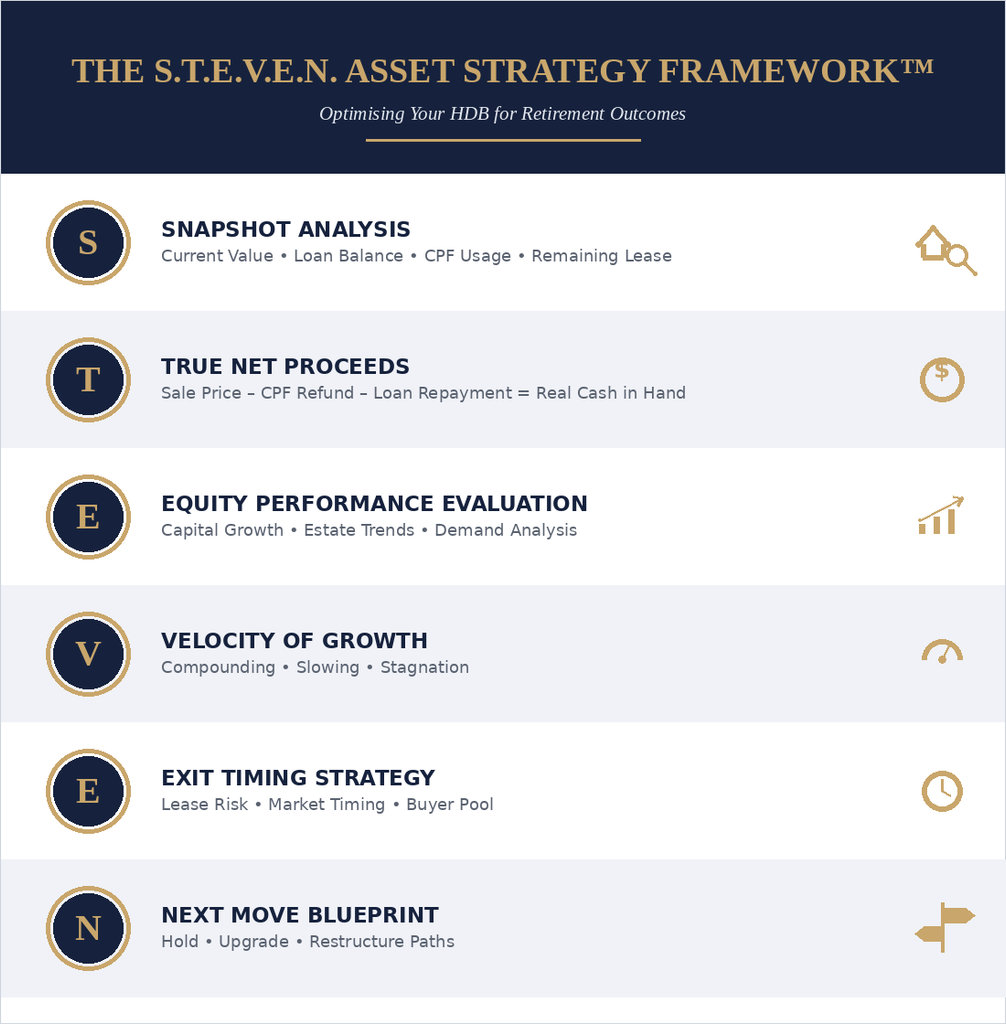
After helping homeowners navigate property decisions since 2008, I developed a structured methodology to analyse property performance.
This framework helps clients understand whether their property is optimised for retirement outcomes.
Goals & Numbers First — Understand your budget, CPF balance, loan eligibility, and what you actually need this property to do for you.
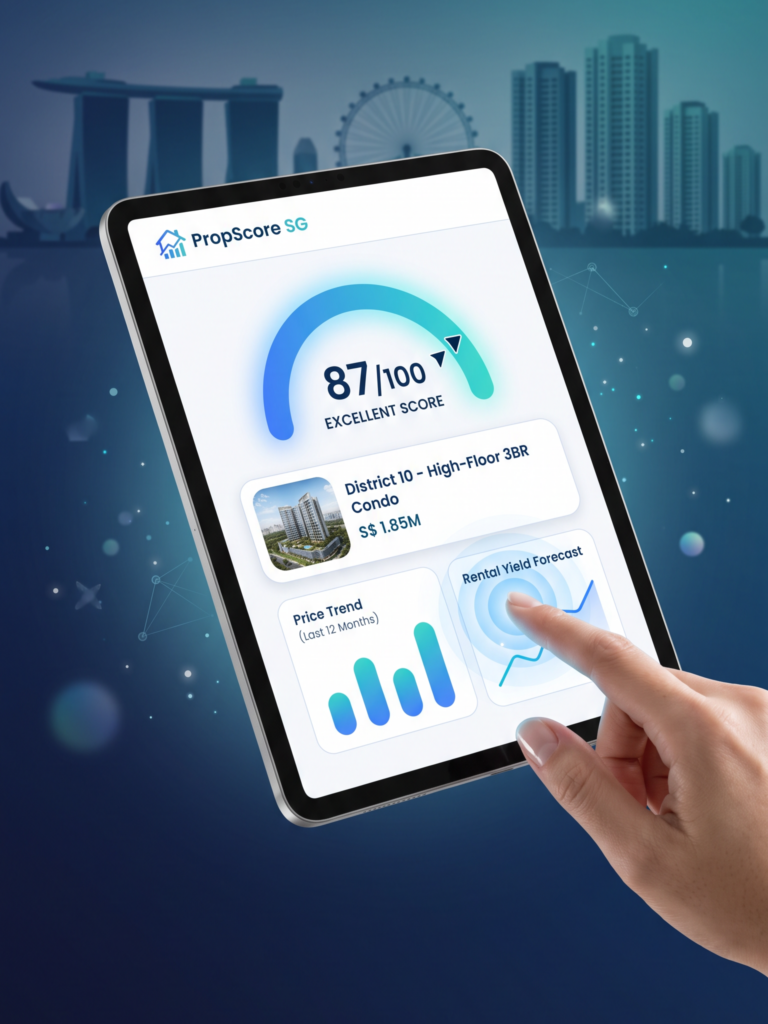
Shortlist & Evaluate — Identify suitable properties and run them through Propscore SG to see how each stacks up as a wealth-building asset, not just a place to live.
Viewings With a Plan — Visit shortlisted units with a clear checklist tied back to your goals, not just gut feel.
Offer & Negotiation — Strategic pricing and negotiation on your behalf, so you don't overpay in a competitive market.
Option to Purchase & Legal Completion — I coordinate with your lawyer and banker so paperwork, timelines, and financing stay on track.
Post-Purchase Plan — A clear view of how this purchase fits your next 5–10 years, so your next move (if any) is already part of the plan.
Financing & Eligibility
Singapore's property financing rules cover CPF usage, loan limits, stamp duties and, for HDB, eligibility and grants. They change from time to time, and what applies to you depends on your age, income, citizenship, and how many properties you already own. Here's the overview. In your free consultation, I'll work out exactly which rules apply to you and what they mean for your retirement plan.
First-Time Buyers — "New to the market? I'll walk you through CPF usage, grants, and loan eligibility step by step."
Upgraders — "Moving from HDB to private, or resale to a larger unit? I'll show you how the move affects your overall asset position."
Investors — "Looking for a second property or rental income? I'll help you evaluate yield, growth potential, and exit timing."
Returning / Overseas Singaporeans — "Buying from abroad or after years away? I'll handle the parts that are hard to do remotely."
Think Like an Asset Strategist
Want to see how a potential purchase would perform as a long-term asset? Run it through Propscore SG, or read the Investor's Playbook to understand the thinking behind the S.T.E.V.E.N. Framework before we talk.
Buyer FAQ
Q1. How much CPF can I use for my purchase?
It depends on the price, the property's valuation, your loan type and your age. CPF use starts at the Valuation Limit, which is based on the lower of the price or the valuation. With a bank loan you can go up to 120% of that limit once you've set aside the Basic Retirement Sum where applicable, while an HDB loan stays capped at the Valuation Limit. Every dollar of CPF you use, plus the interest it would have earned, goes back into your CPF when you sell. I'll map out how much to use and how much to keep in cash so your retirement account isn't drained by one purchase.
Q2. Is Cash Over Valuation (COV) the cash I'm going to receive?
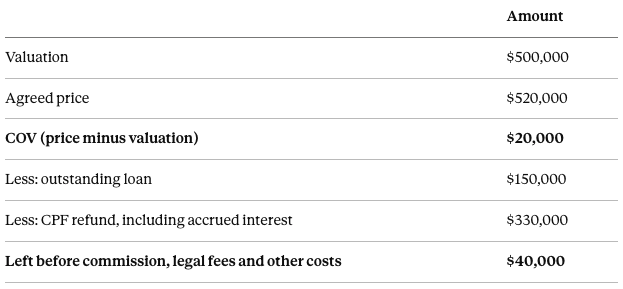
Not automatically. Cash Over Valuation is the amount a buyer pays above the official valuation of a resale flat. If the valuation is $400,000 and the agreed price is $410,000, the COV is $10,000. The buyer has to pay COV in cash, because the home loan doesn't cover it and CPF can't be used for it.
If you're the seller, COV isn't a separate bonus. Your whole sale price first goes towards your outstanding loan and your CPF refund (what you used plus accrued interest), then agent commission, legal fees and any other costs. COV is the part that sits above the valuation, so it helps most when your loan and CPF refund already use up most of the valuation portion, and it can make the difference between ending up with cash in hand or very little.
If you're the buyer, remember that COV is extra cash on top of your downpayment, and it also increases your stamp duty, since Buyer's Stamp Duty is based on the higher of the price or the valuation.
I work out your real net cash before you list, so you know what you'll walk away with, not just the headline price."
(Example: Not a real client)
Of that $40,000, $20,000 came from COV. Your final cash in hand is what's left after all costs, not the COV on its own.
Q3. What's the difference between buying HDB resale vs. BTO vs. private property?
A resale HDB flat is bought from an existing owner, so you can view it, negotiate the price, and typically move in sooner. Grants may apply if you're eligible, and COV may come into play. A BTO is a new flat from HDB at HDB-set prices, usually with a longer wait. Private property such as a condo has no HDB eligibility rules or grants, but ABSD applies if you already own another property, and loans are bank loans only. Each can be right depending on your timeline, budget and retirement plan. I compare them for you side by side.
Q4. How long does the process take from viewing to key collection?
For an HDB resale, the formal process from Option to Purchase to key collection is typically about 8 to 12 weeks. The main stages are the Option to Purchase, a 21-day period to decide whether to proceed, your resale application and HDB's acceptance (which can take several weeks), document signing, and then the completion appointment, which is usually around eight weeks after HDB accepts the application. Add time before that for getting your HDB Flat Eligibility letter and finding the right flat. For private property, the timeline is set by the contract, and I'll walk you through it before you sign.
Q5. Do I need to sell my current home before buying the next one?
No, you don't have to sell first, but the order changes your costs. If you buy first and still own your current home, ABSD may apply to the second property upfront, and may be remitted if you sell the first home within the allowed period and meet the conditions. If you sell first, you may buy as a first-time buyer, but you'll need somewhere to live in between. HDB owners also need to have completed their Minimum Occupation Period before selling. The right sequence depends on your cash, CPF and timing, so let's plan it before you commit to either.
Q6. What's the Resale Levy and does it apply to me?
The Resale Levy is a payment some second-time buyers make when they've already received a housing subsidy and are now buying another subsidised flat from HDB, or certain new Executive Condominiums. Buying a resale flat on the open market doesn't normally trigger it, so it often doesn't apply to resale buyers, but it depends on your housing history. The levy is a fixed amount based on the type of your first flat and has to be paid in cash or from your sale proceeds, not CPF or a loan. Tell me about your housing history and I'll confirm whether it applies.
Q7. How do I know if a property is a good long-term investment, not just a nice place to live?
A good home and a good asset aren't always the same thing. I look at the things that decide how a property performs over your holding period: the remaining lease, location and demand, your all-in holding costs, how easily you can sell or rent it later, and how it fits your retirement timeline. I run the numbers through Propscore SG so you can compare properties on the same basis before you decide, and I'll talk you through what the score means for your own plan.
Don't see your question? Book a free consultation and ask me directly.
Let's Talk About the Retirement You're Building Toward
Whether you're buying, selling, renting, or just want a second opinion on your property's role in your wealth plan, book a free, no-obligation consultation.
CEA Reg. No. R029037APropNex Realty Pte LtdSince 2008